Basal Body Temperature Chart: Are You Actually Timing Conception Correctly?
Why BBT tracking and cervical mucus awareness are the most powerful tools most women trying to conceive have never been shown how to use
Natural Conception · Fertility Awareness · Middlesbrough & Teesside8-minute read Written by Deanna Thomas — MBAcC · CNHC Registered · PG Diploma Obstetrics & Gynaecology · Advanced Fertility Specialist Training
One of the most common things I hear from couples coming to our Middlesbrough clinic is some version of this: "We have been trying for months and nothing is happening, but everything seems fine."
And very often, when we look more carefully, the issue is not that something is wrong. It is that they have been trying at the wrong time, without knowing it.
This is not a failure. It is a gap in the information most people are given when they start trying to conceive. The standard advice is roughly: have regular sex, track your cycle on an app, and see what happens. What that advice leaves out is that most cycle apps work from population averages, most women are not average, and the window for conception each month is far shorter than most people realise.
In this post I want to fill that gap. I am going to explain how your body signals fertility, why timing matters as much as it does, and how a basal body temperature chart, used alongside cervical mucus observation, gives you real, personal data that no algorithm can replicate. I will also explain how we use this information in clinic as part of our fertility acupuncture support in Middlesbrough, and how you can get started today.
Key Takeaways
- The egg is viable for just 12 to 24 hours after ovulation. Missing the window by a day or two means missing the cycle entirely.
- Most cycle apps predict ovulation from averages, not your personal data. For women with irregular cycles, they can be wrong by several days.
- Only 30% of women can accurately identify their fertile window without tracking. The majority may be timing conception incorrectly without realising it.
- Basal body temperature tracking confirms when ovulation has occurred. Cervical mucus observation helps you anticipate it in advance. Together, they give you both.
- Your BBT chart also reveals important clinical information: whether ovulation is happening, how long your luteal phase is, and how stress and lifestyle are showing up in your hormonal patterns.
- We use BBT charts in clinic to tailor acupuncture treatment to your specific picture, and to track whether your cycle is responding as treatment progresses.
The Problem Most Couples Do Not Know They Have

When a couple comes to me after six months of trying without success, the first thing I want to understand is not just whether they are ovulating, but whether they know if they are ovulating, and whether they are timing things accurately.
In a significant number of cases, the answer to both questions is no. Not because anything is medically wrong, but because the tools most people use simply do not give them the information they need.
The app problem
Most popular cycle tracking apps, including some of the most widely used, predict ovulation by calculating an average based on your previous cycle lengths. If your cycles are regular and close to 28 days, they will often be reasonably accurate.
But most women are not textbook. Cycles vary from month to month. Ovulation can be influenced by stress, illness, travel, sleep disruption, and hormonal variation. An app that predicted ovulation on day 14 last month will predict day 14 again this month, regardless of what your body is actually doing.
A 2013 study found that only 30% of women can accurately identify their fertile window. That means the majority of women trying to conceive may be timing sex based on an algorithm that does not reflect their personal biology.
The other part of the problem is how short the window actually is.
12–24 hrs The time an egg is viable after ovulation. Miss this window by even a day and conception is not possible that cycle, regardless of how regularly you are trying.
Sperm can survive in fertile cervical mucus for up to five days, which means the practical conception window is around five to six days each cycle. But the egg itself is available for just 12 to 24 hours. Getting the timing right is not a minor variable. For many couples, it is the whole answer.
How many days per year is a woman actually fertile?
It is worth pausing on this for a moment, because the numbers are more striking than most people expect.
With an average of 12 to 13 cycles per year and a fertile window of roughly six days per cycle, a woman has approximately 72 potentially fertile days in a year. That sounds like a reasonable window. But within those 72 days, the egg itself is only viable for 12 to 24 hours per cycle. That means there are just 12 to 13 days per year when the egg is actually present and available for fertilisation. Out of 365 days, that is around 3.5% of the year.
If you are timing conception from an app that is predicting ovulation incorrectly by even three to four days, you could miss every single one of those 12 days across an entire year without ever understanding why conception has not happened. Nothing would be wrong. You would simply be trying at the wrong time, month after month.
This is why knowing when you personally ovulate is not a nice-to-have. It is the foundation that everything else is built on.
What Fertility Awareness Actually Gives You
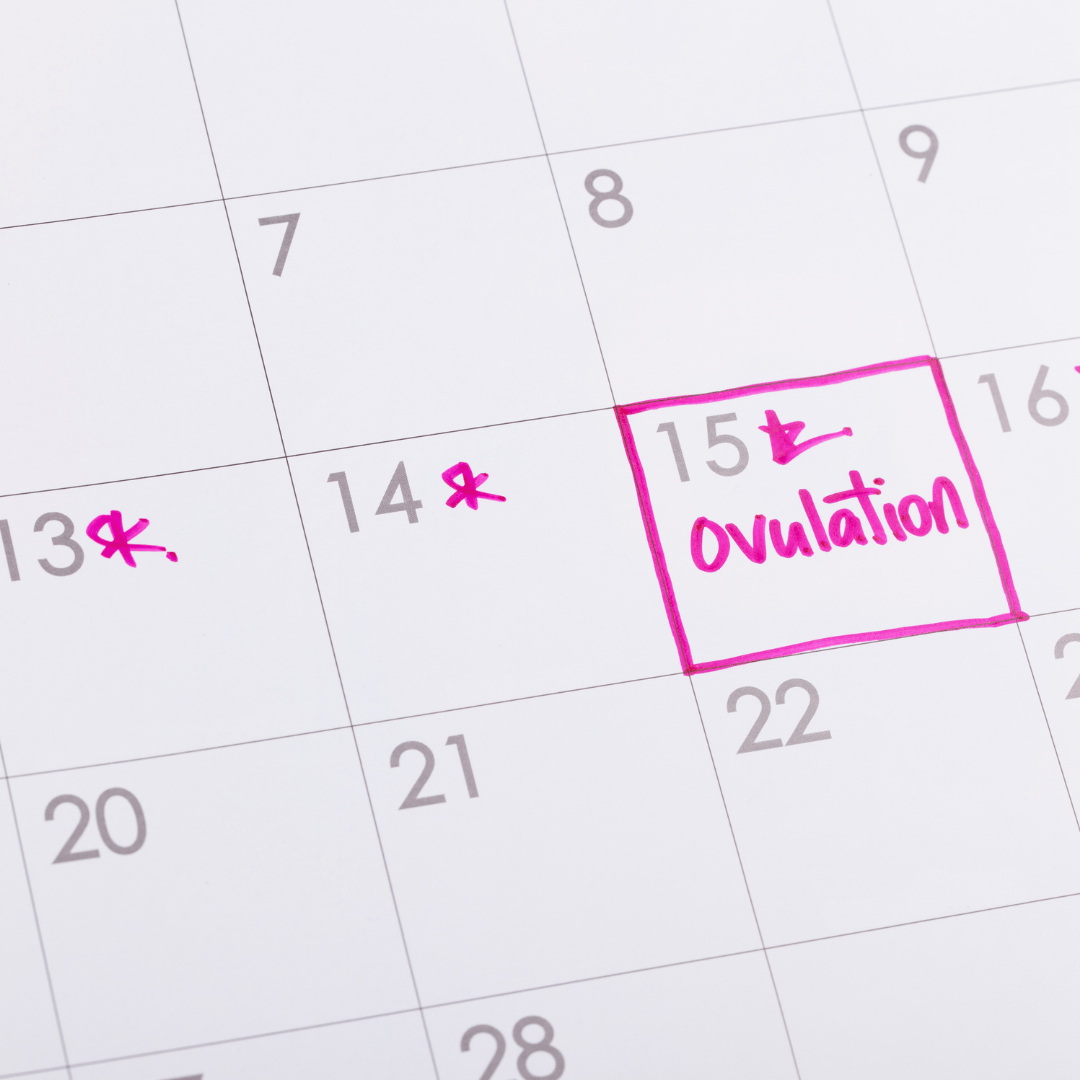
Fertility awareness methods work by helping you read your body's own signals rather than relying on predictions. There are two primary signs to track, and they work best when used together.
Basal body temperature tells you when ovulation has occurred. Cervical mucus tells you when it is approaching. Combined, they give you both confirmation and anticipation, which is exactly what you need to time conception with real confidence.
These are not new or fringe approaches. The sympto-thermal method, which combines both, has been studied extensively and has a 99.6% efficacy rate for confirming ovulation when used correctly (Frank-Herrmann et al., 2007). What has changed is that these methods are now easier to apply than ever, thanks to apps like Fertility Friend that handle the charting for you.
The key difference from a cycle app is that you are generating your own data, every single morning, based on what your body is actually doing. Not what a 28-day average suggests it might be doing.
One client thought she was ovulating on day 14 because that is what her app said. Her chart showed ovulation consistently closer to day 20. She had been missing her window for months without knowing it. Once we adjusted her timing, she conceived naturally within two cycles.
How to Read a Basal Body Temperature Chart: What the Patterns Mean
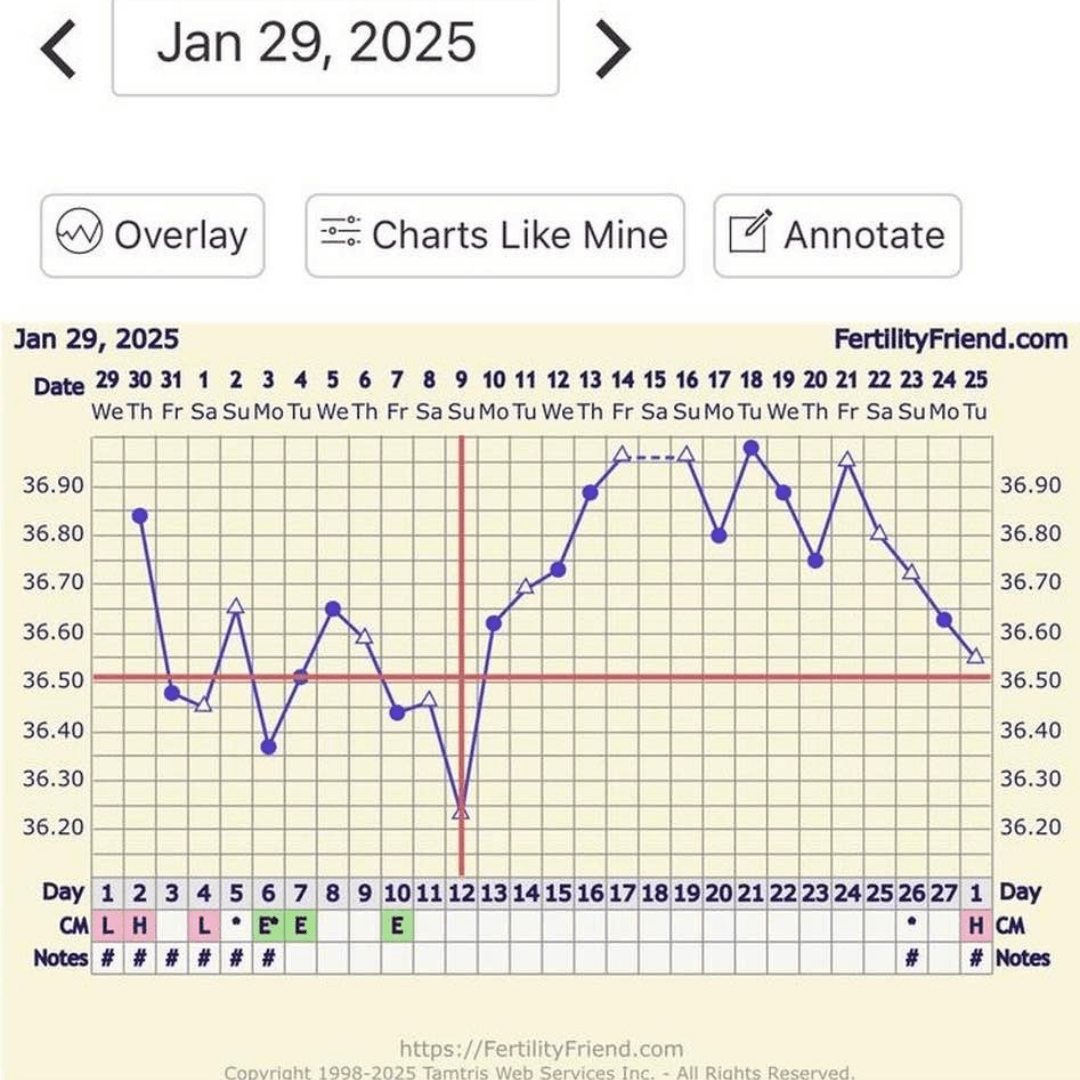
Your basal body temperature is your body's resting temperature, taken first thing in the morning before you move, eat, or speak. After ovulation, rising progesterone causes a small but consistent rise in BBT, typically 0.2 to 0.5 degrees Celsius, which remains elevated through the luteal phase until your period arrives.
A basal body temperature chart plots these daily readings across your cycle. Over time, a healthy chart shows a clear biphasic pattern: lower temperatures in the first half of your cycle, a visible rise after ovulation, and sustained higher temperatures through the second half. That shift confirms ovulation has occurred.
What a BBT chart reveals
- Whether ovulation is occurring at all. If there is no clear thermal shift, ovulation may not be happening consistently. This is important clinical information.
- When in your cycle ovulation is actually happening. Not day 14 by default, but your personal pattern, which may be quite different.
- The length of your luteal phase. The time between ovulation and your period. A luteal phase shorter than 10 days can make implantation more difficult, even if ovulation is occurring normally.
- How stress, sleep, and lifestyle are showing up in your hormones. Erratic temperatures, delayed ovulation, and flattened patterns are all visible in the chart and often reflect what is happening in the body more broadly.
- Early signs of pregnancy. If temperatures stay elevated beyond the point where they would normally drop before your period, and your period does not arrive, this is worth noting.
To get started you need one thing: a basal thermometer that reads to two decimal places. A standard thermometer measures to one decimal place and will miss the subtle shifts involved. Take your temperature at the same time every morning, after at least five hours of uninterrupted sleep, before you move or speak. Log it immediately using the Fertility Friend app.
Fertility Friend will draw a cover line across your chart once enough data has been entered. This is a horizontal reference line calculated from your pre-ovulation temperatures. When three or more post-ovulation readings sit consistently above it, this confirms ovulation has occurred. It makes the thermal shift much easier to see at a glance, particularly in your first few cycles when you are still learning to read your own pattern.
BBT tracking with PCOS
For women with PCOS, BBT tracking is both more challenging and more valuable than for women with regular cycles. Because PCOS often causes delayed, irregular, or absent ovulation, a chart may show an extended low-temperature phase with no clear biphasic shift, or a shift that appears later than expected in the cycle. This is important information rather than a sign that tracking is not working. It tells you, and any practitioner you work with, that ovulation timing is unpredictable and that timing conception from an app is particularly unreliable for you personally. A wearable monitor like Ovusense captures continuous overnight temperature data and is generally more accurate for women with PCOS than a single morning reading, because it is less sensitive to the sleep disruptions and lifestyle variation that can be more common in this group.
What is normal, and what is worth investigating
Most first-time trackers feel uncertain when their chart does not look like a textbook example. A few things to know: one or two erratic readings in a cycle are almost always lifestyle-related, disrupted sleep, alcohol, illness, rather than hormonal. A single unusual temperature does not invalidate your chart. You are looking for overall patterns across multiple cycles, not perfection on any given day.
What is worth taking note of across two or three cycles: no clear biphasic shift at any point, temperatures that remain consistently low throughout, a luteal phase that is consistently fewer than 10 days, or ovulation that appears to be happening after day 21. None of these are cause for alarm on their own, but they are worth discussing with a specialist. Bringing your Fertility Friend chart to a consultation gives us far more to work with than a conversation without it.
How to Track Cervical Mucus Alongside Your BBT Chart
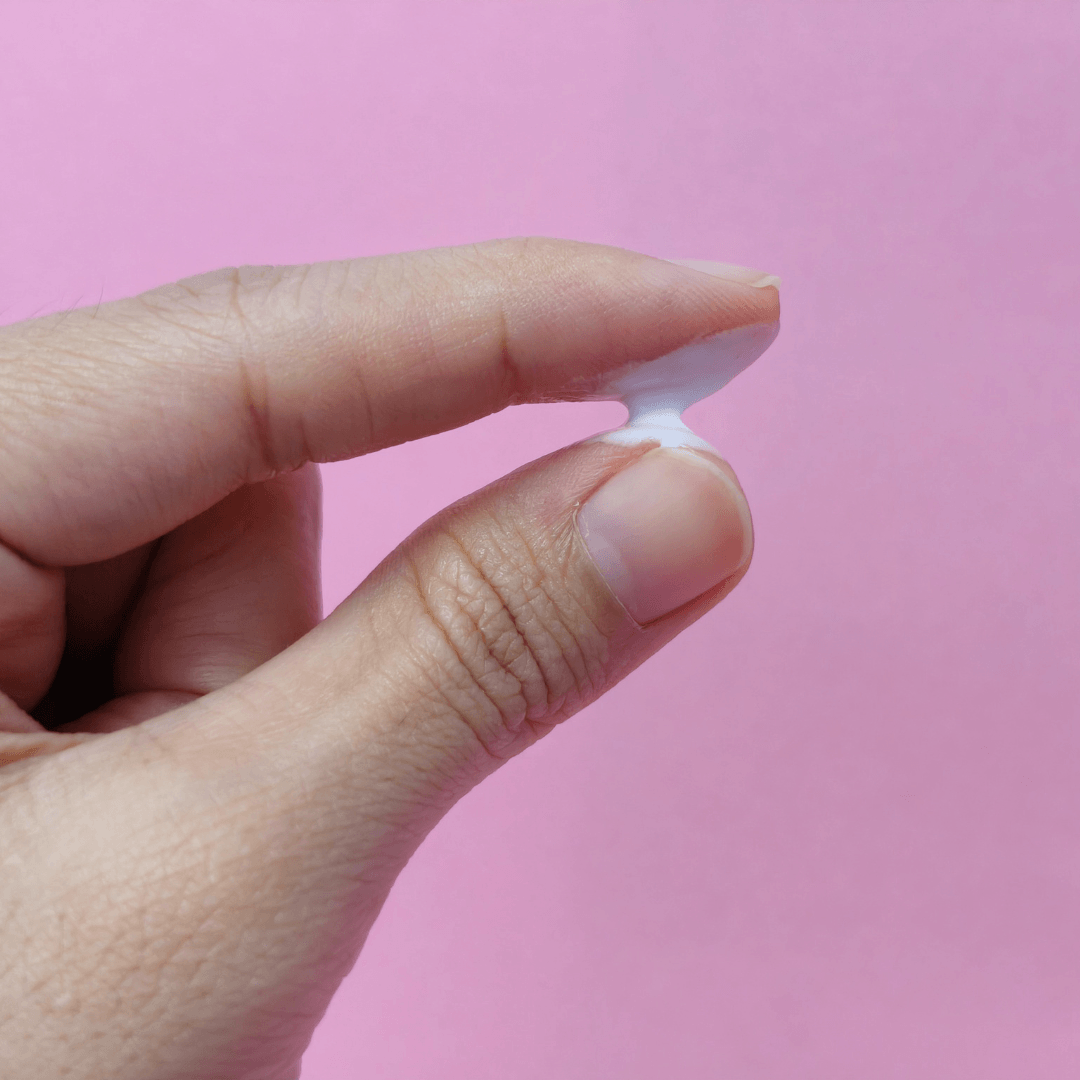
BBT tells you ovulation has happened. Cervical mucus tells you it is coming. This is why the two methods work so well together.
Throughout your cycle, the consistency of your cervical mucus changes in response to hormonal shifts. Learning to observe these changes takes a little practice, but most women pick it up within one or two cycles.
- Just after your period: dry or minimal. Oestrogen is low. The cervix produces little fluid. Not a fertile time.
- Approaching mid-cycle: sticky or creamy. Oestrogen is rising. Some mucus is present but it is not yet hospitable to sperm.
- In the days before ovulation: wet, slippery, clear. Oestrogen is at its peak. Mucus becomes stretchy and clear, similar in texture to raw egg white. This is your most fertile mucus. Sperm can survive in it for up to five days, which is why these are your highest-fertility days.
- After ovulation: dry again, or thick and opaque. Progesterone rises. The cervical environment becomes less hospitable to sperm. The fertile window has closed.
Observing cervical mucus each day alongside your BBT creates a complete picture. When you see egg-white mucus, ovulation is typically one to two days away, which means this is the time to prioritise intimacy. When your BBT rises to confirm ovulation has occurred, you know the window has opened and closed.
What to do when you find your fertile window
Once you can identify your fertile window with confidence, the most common question is how to act on it. The instinct for many couples is to time one well-placed attempt and wait. In practice, the evidence suggests a different approach works better.
Having intercourse every one to two days throughout your fertile window, rather than saving up for a single timed attempt, maintains better sperm quality and motility. Sperm stored for several days before use tends to have a higher proportion of DNA-fragmented or less motile cells. Fresher sperm, replenished through regular activity during the fertile window, gives each attempt the best possible conditions. This does not mean every day without exception — every other day is sufficient and reduces the pressure that can build around rigidly scheduled timing.
Where ovulation predictor kits fit in
Ovulation predictor kits (OPKs) detect the LH surge that triggers ovulation, typically occurring 24 to 36 hours before the egg is released. They can be a useful addition, particularly for women who find cervical mucus observation difficult to interpret at first, but they have important limitations worth understanding.
OPKs indicate that the hormonal trigger for ovulation is present. They do not confirm that ovulation actually occurred. For women with PCOS, LH levels can be consistently elevated, producing false positives that are genuinely misleading. And like apps, OPKs tell you something is about to happen without confirming it did. Combined with BBT, which provides that confirmation, they become a much more useful tool. Used alone, they give you half the picture.
How to Start Tracking: Tools, Apps, and What You Actually Need
The barrier to getting started is lower than most people expect. You need three things: a basal thermometer, a charting app, and consistency. Here is what we recommend to clients at our Middlesbrough clinic.
Step one: choose your thermometer
A standard thermometer will not work for BBT tracking. You need one that measures to two decimal places to detect the subtle shifts involved. Here are the two options we recommend:
Step two: download Fertility Friend
Fertility Friend is the charting app we recommend to all fertility clients. The free version covers everything you need: temperature plotting, cervical mucus logging, thermal shift detection, cycle statistics, and a visual chart that makes patterns easy to read. You do not need the paid version to get meaningful data. It is available on iOS and Android.
Step three: build the habit
- Take your temperature at the same time every morning. Set your alarm and keep your thermometer within reach. Take the reading before you move, sit up, or speak. Log it in Fertility Friend immediately.
- Ensure at least five hours of uninterrupted sleep beforehand. Disrupted sleep is the most common source of erratic readings. Note any disruptions on your chart rather than ignoring them.
- Check and record your cervical mucus each day. Before or after using the bathroom, note the consistency of any mucus present. Dry, sticky, creamy, wet, or egg-white: log these in Fertility Friend alongside your temperature. It takes less than a minute.
- Note anything that might affect a reading. Late night, alcohol, illness, unusual waking time: log these as notes. An erratic reading with a known reason is useful data.
- Track for at least three cycles before drawing conclusions. The first cycle is usually about establishing the habit. By cycles three and four you will have a meaningful pattern and a much clearer picture of your personal ovulation timing.
How We Use BBT Charts in Clinic
When a client brings their Fertility Friend chart to our clinic in Middlesbrough, it tells us things a consultation alone would not reveal. The chart is a window into hormonal patterns across an entire cycle, not just a snapshot on a single day.
Here is what we look for, and what each pattern means for treatment:
Patterns we commonly see
- No clear thermal shift. Suggests ovulation may not be occurring consistently. This is one of the most important findings a chart can show, and it changes the direction of treatment immediately.
- Ovulation happening later than expected. Day 18, 20, even later. This is often the hidden reason timing-related conception difficulties persist, particularly for women using apps that assume day 14.
- Short luteal phase. Fewer than 10 days between ovulation and the period. Even when ovulation is occurring, a short luteal phase can prevent implantation from establishing. Acupuncture can support luteal phase length by addressing the hormonal picture behind it.
- Erratic, unstable temperatures. Often reflects poor sleep, high cortisol, or nervous system dysregulation. One of the patterns that responds most consistently to acupuncture treatment. Many clients notice their charts become more stable and readable as a course of treatment progresses.
- Slow or gradual rise rather than a clear biphasic shift. May suggest progesterone is rising but sluggishly. Worth investigating alongside other markers.
How the chart shapes treatment
We ask new clients to begin tracking before their first appointment if possible, so we arrive at the initial consultation with real data rather than starting from scratch. The chart tells us what phase of the cycle to focus on, which acupuncture points are most appropriate, and whether the issues we are seeing are follicular, ovulatory, or luteal in nature.
As treatment continues, the chart becomes a measure of progress. When temperatures stabilise, ovulation becomes more consistent, or the luteal phase lengthens, those are clinical signals that the body is responding. That feedback is valuable both for us as practitioners and for clients who want to understand what is changing and why.
One client came to us after eight months of trying, with a BBT chart showing consistently erratic temperatures and no clear thermal shift. Her app had been telling her she was ovulating on day 14. Her chart suggested she was not ovulating consistently at all. Over three months of acupuncture treatment, her chart gradually showed a clearer biphasic pattern, ovulation began occurring regularly, and she conceived in the fourth month of treatment. The chart was not just how we identified the issue. It was how we tracked that something was genuinely shifting.
If you are based in Middlesbrough, Stockton, Yarm, Ingleby Barwick, Darlington, or anywhere across Teesside and would like to discuss your chart as part of a fertility consultation, you are welcome to find out more about our fertility acupuncture support here.
Tracking After the Pill, While Breastfeeding, or with Irregular Cycles
If you have recently come off hormonal contraception, your body may take several cycles to re-establish its natural rhythm. This is completely normal and does not indicate anything is wrong. It simply reflects the time your hormonal system needs to recalibrate after suppression.
In practice, this often means your first few BBT charts may look erratic, ovulation may be delayed or inconsistent, and the biphasic pattern may take a few cycles to appear clearly. Tracking through this period is still worthwhile. It helps you understand when your cycle has settled, and it gives you and any practitioner you work with a baseline picture of where you are starting from.
For women who are breastfeeding, prolactin suppresses ovulation, so temperatures may remain low and flat for extended periods. Ovulation can return before your period does, which means tracking is particularly useful if you are trying to conceive while still breastfeeding.
For women with PCOS or consistently irregular cycles, a wearable monitor like Ovusense tends to give more reliable data than a standard thermometer, because it captures continuous overnight readings rather than a single morning point that can be more easily disrupted. Allow more cycles than average to identify your pattern, and expect variation from cycle to cycle.
When Tracking Is Not Enough: When to Seek Further Support
BBT tracking gives you information. What matters is what you do with it.
If you have been tracking consistently for three to four cycles and any of the following applies, it is worth exploring further support rather than continuing to wait:
- No clear biphasic shift across multiple cycles. Suggests ovulation may not be occurring consistently. This warrants investigation rather than continued monitoring alone.
- Luteal phase consistently fewer than 10 days. Even when ovulation is occurring, a short luteal phase can prevent implantation from establishing. This is addressable but needs to be identified first.
- Ovulation consistently appearing after day 21. Late ovulation compresses the window in which conception is possible each cycle and may reflect an underlying hormonal pattern worth exploring.
- Temperatures that remain erratic with no readable pattern. Particularly if combined with other symptoms, this may point to thyroid function, adrenal stress load, or sleep disruption significant enough to affect your hormonal picture.
- Six months of well-timed, regularly-spaced intercourse without conception. At this point, a consultation that looks at both partners, cycle data, and broader health picture is a sensible next step — regardless of whether tests have previously come back normal.
The chart gives you the clues. A specialist can help you interpret them and respond to what they are showing. If IVF is already on the horizon for you, BBT tracking remains just as relevant — our guide to acupuncture for IVF covers how we use this information as part of IVF preparation specifically.
Taking It Further: The Natural Fertility Programme™
For couples who want structured, ongoing support alongside their tracking, our Natural Fertility Programme™ is designed specifically for those trying to conceive naturally. It includes acupuncture for both partners, personalised nutritional guidance, and ongoing cycle review using your BBT data as a central part of treatment planning.
BBT tracking is not a requirement to work with us. You can start wherever you are. But for clients who are already tracking or willing to start, the chart becomes one of the most useful clinical tools we have. It shortens the time we spend trying to understand what is happening and increases the precision with which we can support you.
Frequently Asked Questions
How do I know if I am actually ovulating?
The most reliable home indicator is a sustained thermal shift on your BBT chart: temperatures that rise by at least 0.2 degrees Celsius and remain elevated for three or more days. Egg-white cervical mucus in the days before the shift is a supporting sign. If you track for two to three cycles and see no clear thermal shift, it is worth discussing with a healthcare provider or fertility specialist, as this may indicate that ovulation is not occurring consistently.
My cycle is irregular. Can I still use BBT tracking?
Yes, and it is arguably more valuable for you than for someone with a regular cycle. Irregular cycles are precisely the situation where app-based prediction is least reliable. BBT tracking responds to what your body is actually doing rather than what an algorithm expects, which means it will still capture ovulation whenever it occurs, even if the timing varies from cycle to cycle. Allow more cycles to identify your pattern, and expect some variation.
I have been tracking for three months and I still cannot see a clear pattern. What should I do?
This is worth exploring with a specialist. A chart with no clear biphasic pattern across multiple cycles may indicate that ovulation is not occurring reliably, which can have a number of causes including PCOS, thyroid issues, or post-pill hormonal recovery. It could also reflect a lifestyle factor like consistently disrupted sleep that is affecting readings. Bringing your Fertility Friend chart to a consultation gives us a much richer starting point for understanding what is happening than a standard appointment without that data.
Can my partner be involved in this process?
Absolutely, and we encourage it. Understanding your cycle together helps with timing, reduces the pressure that often builds around conception, and gives both partners a shared language for what is happening. At our clinic, we also assess and support male fertility as part of a complete picture. Approximately 40% of fertility challenges involve a male factor, and treating both partners together is central to how we work. You can find out more about acupuncture for male fertility on our dedicated male fertility page.
Is Fertility Friend really free?
Yes. The free version of Fertility Friend includes everything you need to get started: temperature charting, cervical mucus logging, cycle statistics, and the ability to identify your cover line and thermal shift. There is a paid version with additional features, but the free version is genuinely sufficient for most users, and it is the version we recommend clients start with.
How does acupuncture help with the issues a BBT chart might reveal?
Different patterns call for different approaches. A short luteal phase suggests progesterone support is needed in the second half of the cycle. Delayed ovulation often points to follicular phase support. Erratic temperatures frequently reflect nervous system dysregulation and respond well to the calming, regulatory effect of acupuncture. The chart tells us where to focus. Acupuncture gives us a precise, non-invasive way to address what the chart reveals, and the chart then shows us whether things are shifting in response.
Final Thoughts
If you are trying to conceive and relying solely on a cycle app, you may be working from incomplete information. That is not a criticism. It is simply what most people are given when they start this journey. The tools exist to do this more precisely, and they are not complicated or expensive to use.
Learning to track your basal body temperature and observe your cervical mucus is one of the most empowering things you can do at this stage. It takes a few minutes each morning. It gives you real data about your own cycle. And it very often reveals something important that changes either the timing, the approach, or the direction of the support you need.
If you are based in Middlesbrough, Yarm, Stockton, Ingleby Barwick, Darlington, or anywhere across Teesside and would like to talk through what your chart might be showing, or to start with a full fertility consultation, you are welcome to get in touch at your own pace. There is no pressure here, only support whenever you feel ready.
And if you are not quite ready to book, you are welcome to join our free community Rooted in Wellness on Facebook, where we share guidance on cycle tracking, fertility, and women's health in a supportive, non-pressured space.
Explore Fertility Acupuncture Support Book a Consultation — £99 Initial consultation 60 to 75 minutes. Bring your chart if you have one."Wellness grows where energy flows."
References
- Stanford JB, White GL, Hatasaka H. (2013). Timing intercourse to achieve pregnancy: current evidence. Obstetrics & Gynaecology. Referenced for fertile window identification accuracy in women trying to conceive.
- Setton R, Tierney C, Tsai T. (2016). The accuracy of web sites and cellular phone applications in predicting the fertile window. Obstetrics & Gynaecology, 128(1), 58–63.
- Frank-Herrmann P, et al. (2007). The effectiveness of a fertility awareness-based method to avoid pregnancy in relation to a couple's sexual behaviour during the fertile time. Human Reproduction, 22(5), 1310–1319.
- American Society for Reproductive Medicine. (2012). Optimising natural fertility: a committee opinion. Fertility and Sterility, 100(3), 631–637.
About the Author — Deanna Thomas
BSc (Hons) · Lic.Ac · MBAcC · CNHC Registered · PG Diploma Obstetrics & Gynaecology · Advanced Fertility Specialist Training (Naava Carman)Deanna Thomas is a degree-trained acupuncturist and women's health specialist based in Middlesbrough, with advanced fertility training through Naava Carman, one of the UK's most respected educators in fertility acupuncture. She holds a postgraduate diploma in obstetrics and gynaecology and is a registered member of the British Acupuncture Council and CNHC.
BBT charts are a routine part of Deanna's clinical assessment. She uses them with fertility clients across Teesside and the North East to understand hormonal patterns, tailor acupuncture treatment, and track cycle changes as treatment progresses.
Deanna Thomas – Acupuncture & Wellbeing is based at The House, 283 Acklam Road, Middlesbrough, TS5 7BP, and holds over 800 five-star reviews across Google and Fresha. Learn more about Deanna.